The roll of silk we almost threw away.
Clouduvet did not begin with a launch plan. It began with a canceled order, two weeks of wages coming due, and one person who refused to let good silk go to waste.
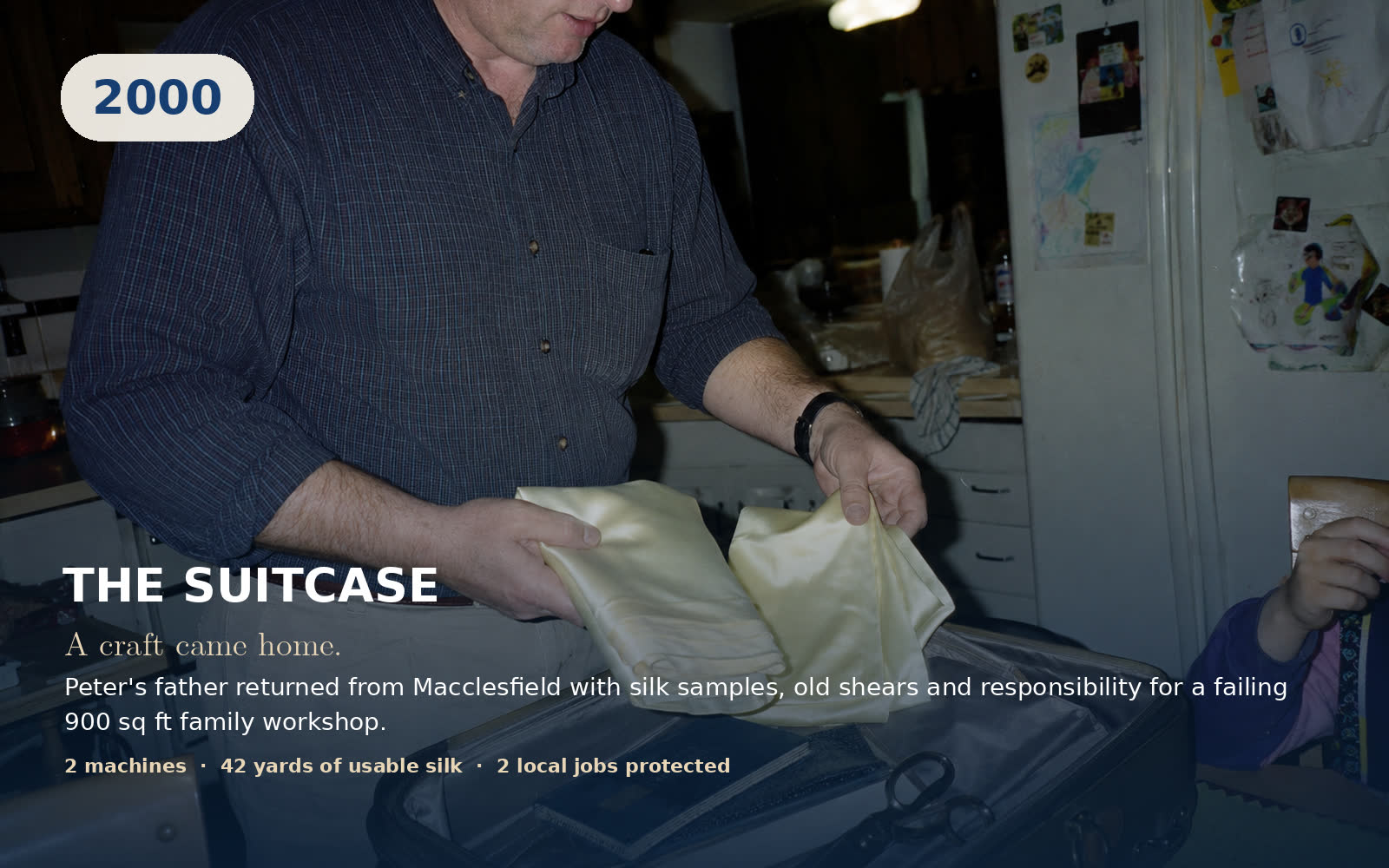
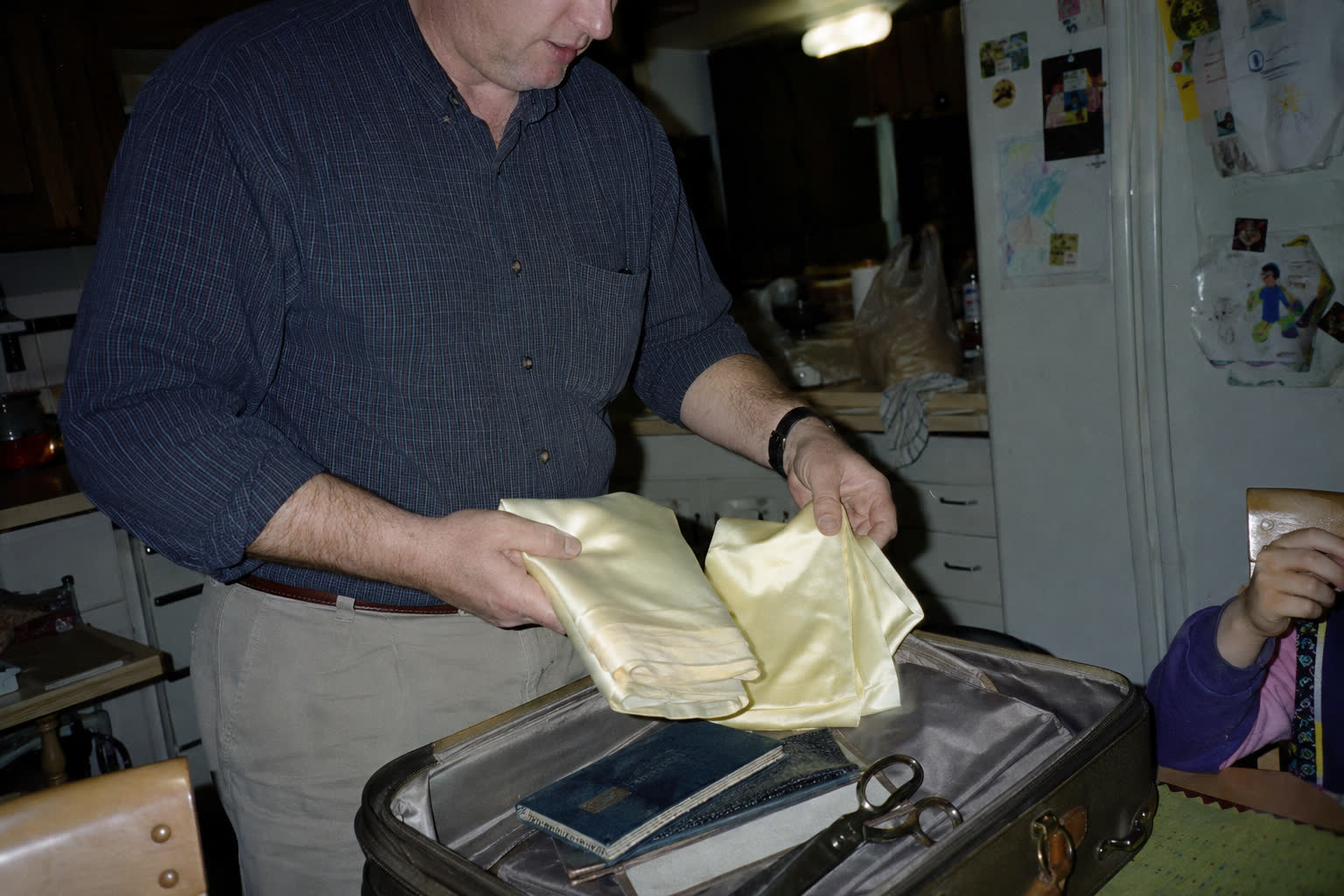
A suitcase came home from England.
In 2000, Peter’s father returned from Macclesfield, England, to take responsibility for a struggling family silk workshop in Greensboro, North Carolina.
Inside his worn brown suitcase were silk swatches, tailor’s shears, a small ledger, and notes from the mills he had visited. The workshop itself had two old sewing machines and only 42 yards of usable silk.
He taught Peter to inspect fabric with his hands before trusting its shine.
“A photograph can hide a flaw. Your fingers won’t.”
The order disappeared. The silk did not.
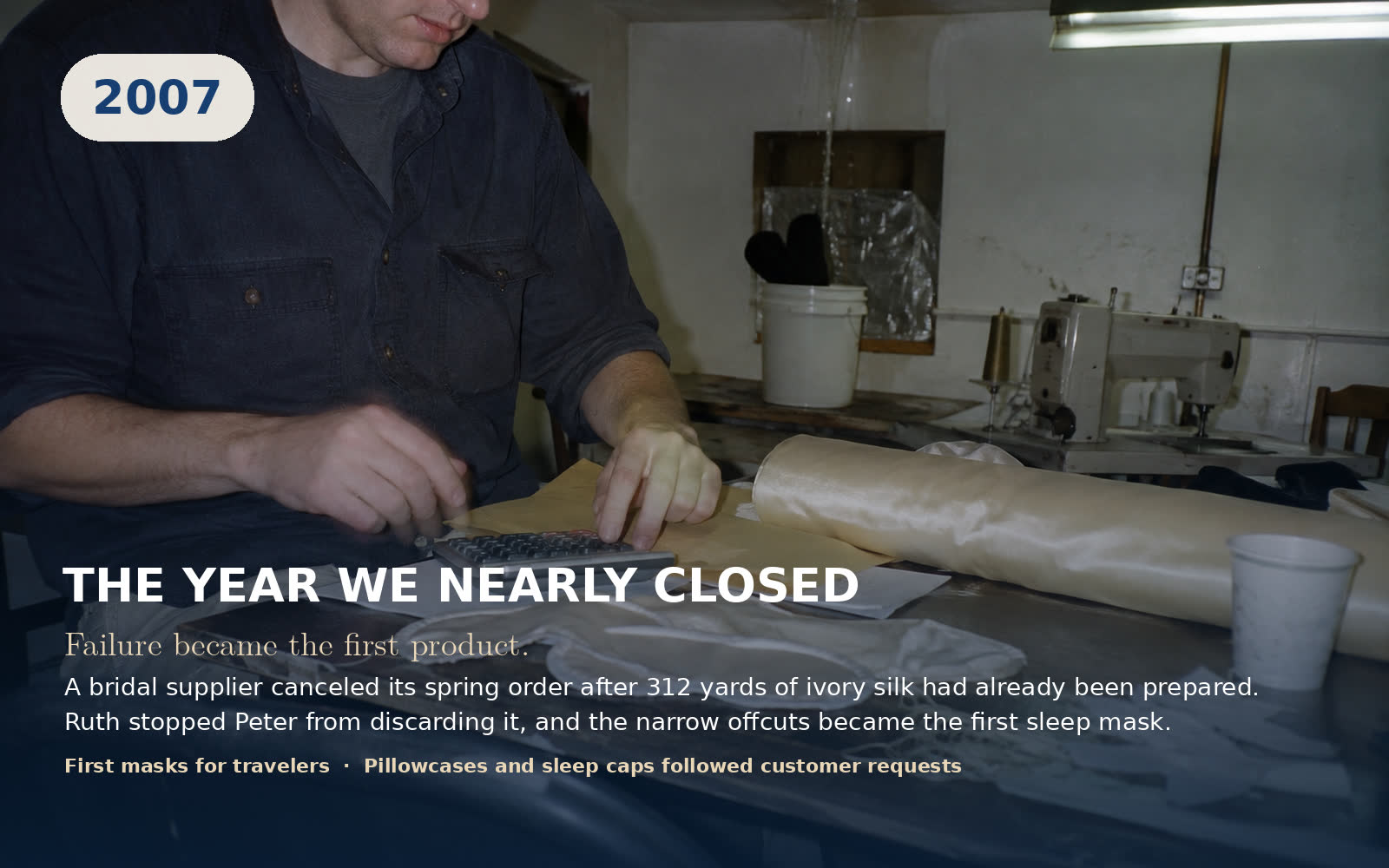
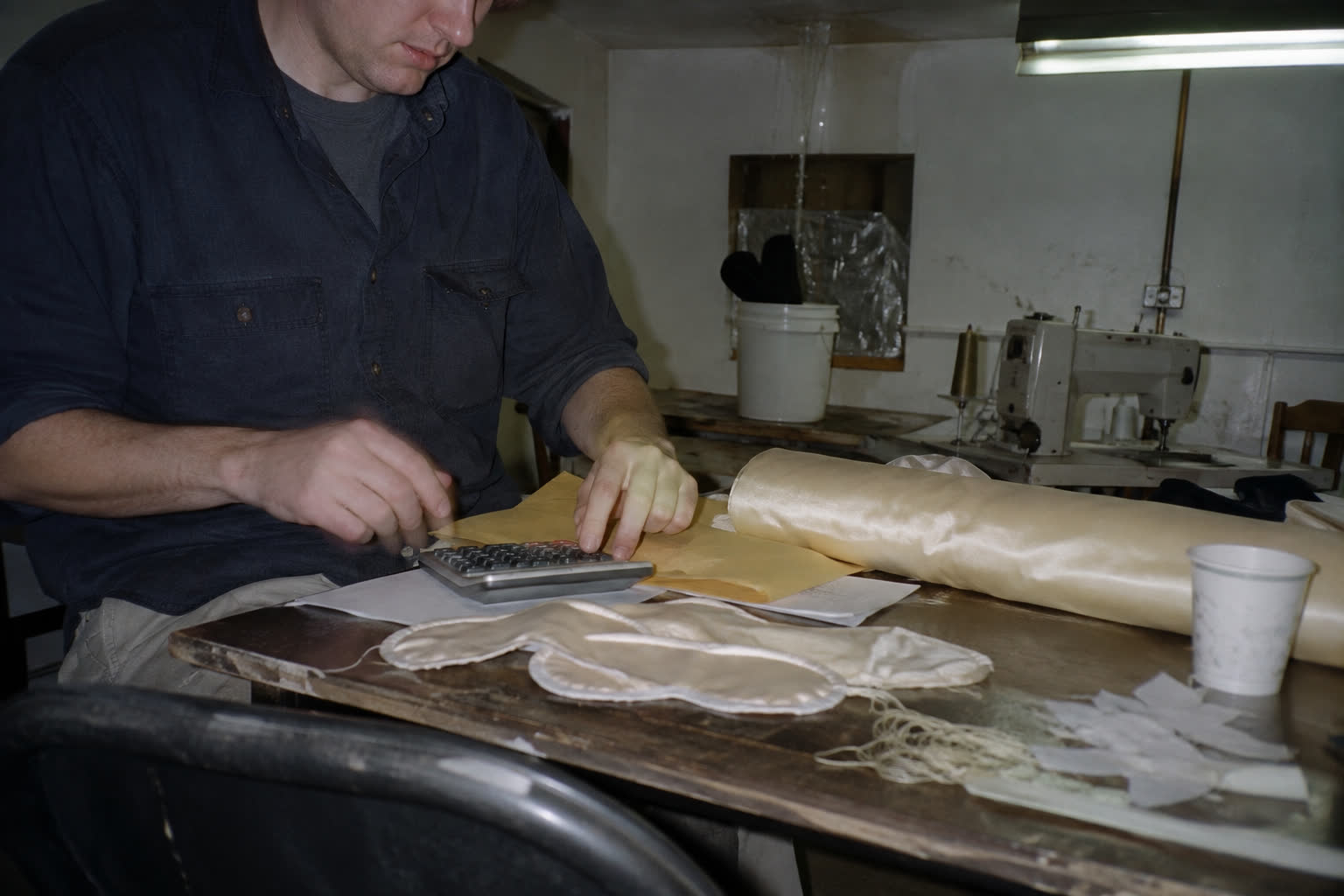
A bridal supplier canceled its spring order after 312 yards of ivory silk had already been prepared. Rent and two weeks of wages were due. Peter spent the night doing the math and decided to close the workshop.
The next morning, Ruth Hall, the only sewer working beside him then, put her hand on the silk.
“If they won’t buy the silk, let’s make something people will.”
They carried it back to the cutting table.
They started small enough to learn.
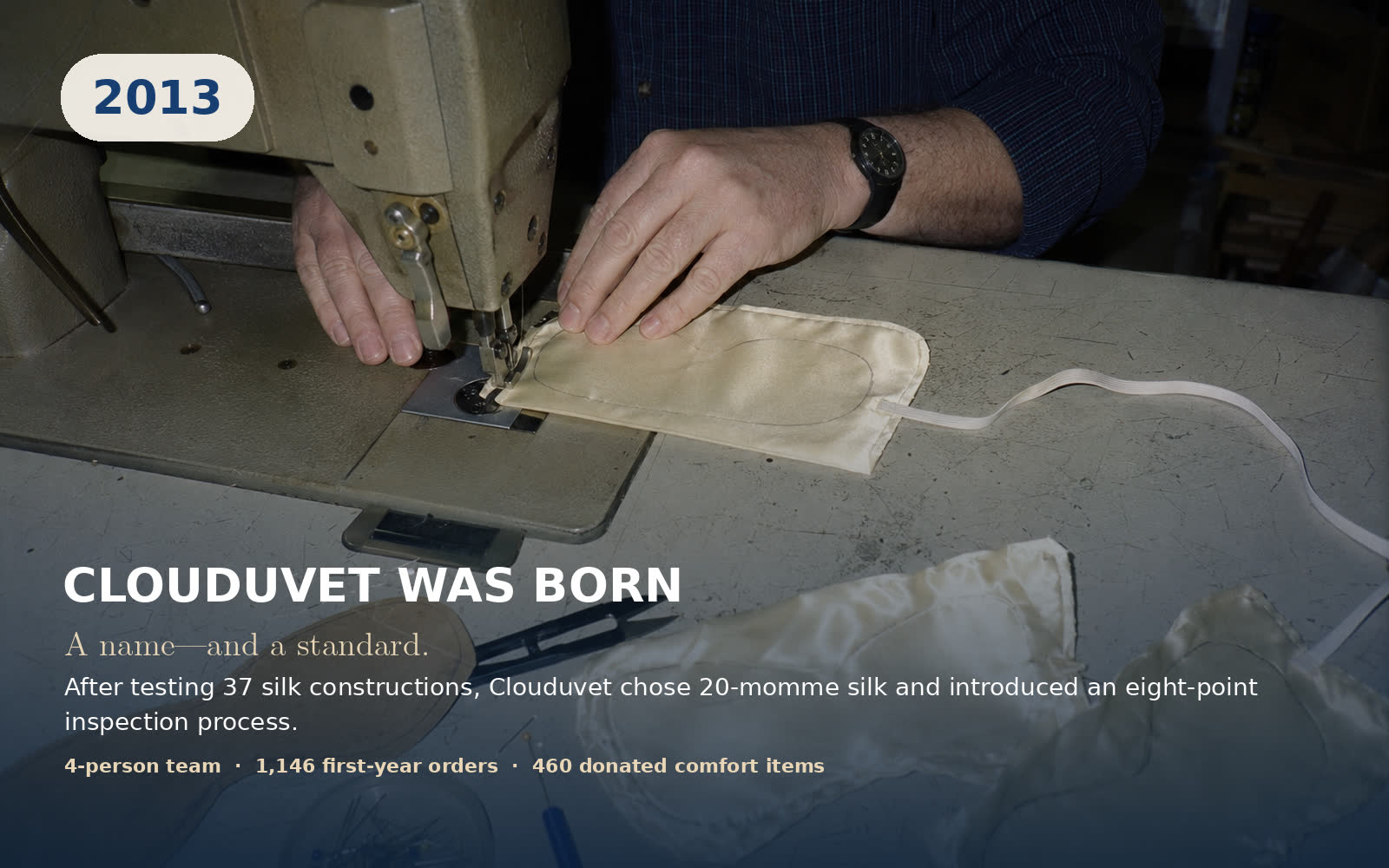
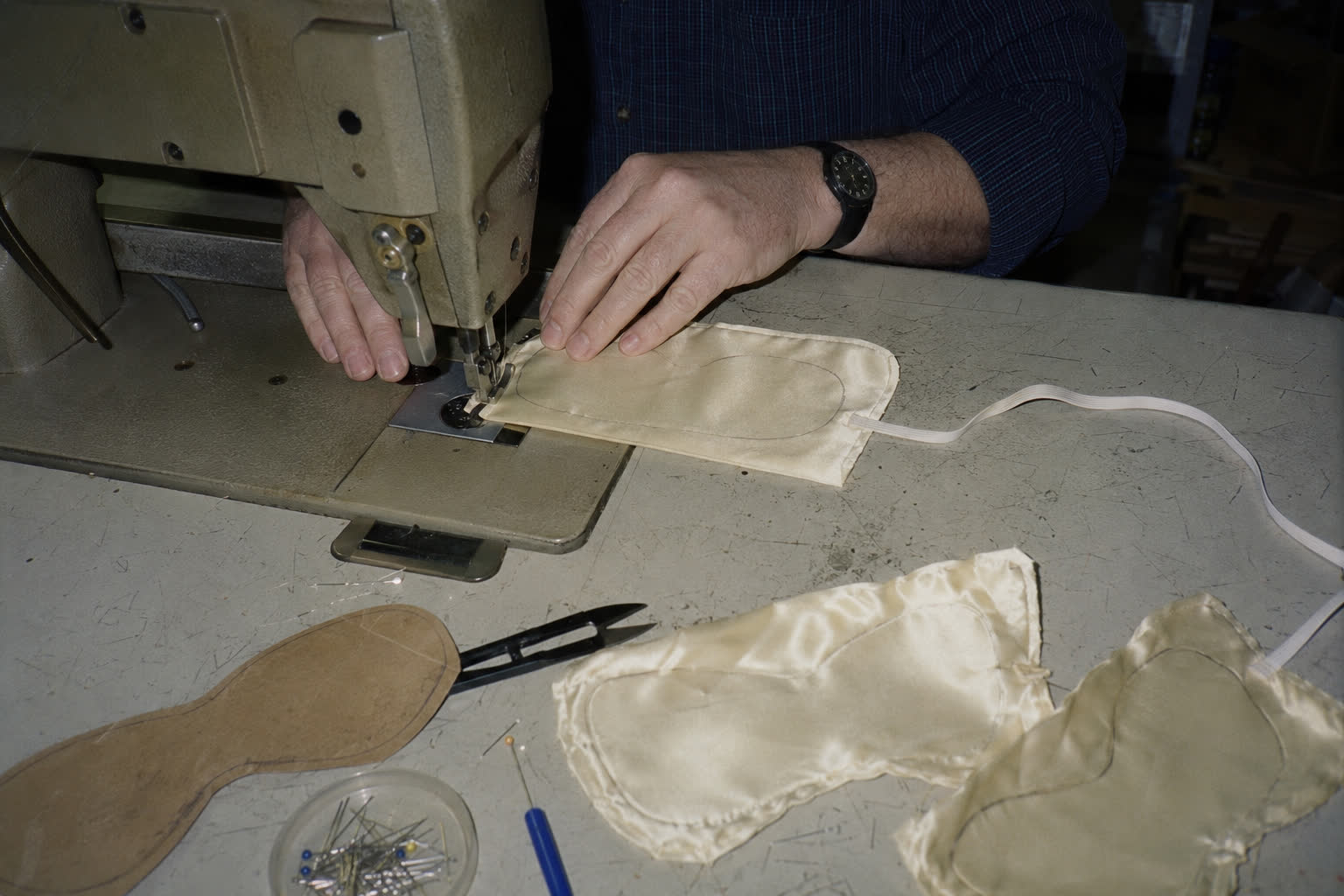
A full pillowcase used too much fabric for an untested idea, so Ruth began with the narrow pieces left from the bridal widths. She drew a sleep mask, softened the inner seam, and wrapped the elastic in silk.
Peter tried three versions. The first pressed too close to the eyelid. The second slipped when he turned. The third stayed dark without feeling tight.
Ruth still keeps the first paper pattern in the bottom drawer of her worktable.
One question led to the next product.
The first person to pay for the mask was a frequent-flying flight attendant. Hotel curtains rarely closed completely, she said, and the stiff mask in her crew bag left a line across her face. Two weeks later, she came back for four more—and asked for a wider strap and a softer nose bridge.
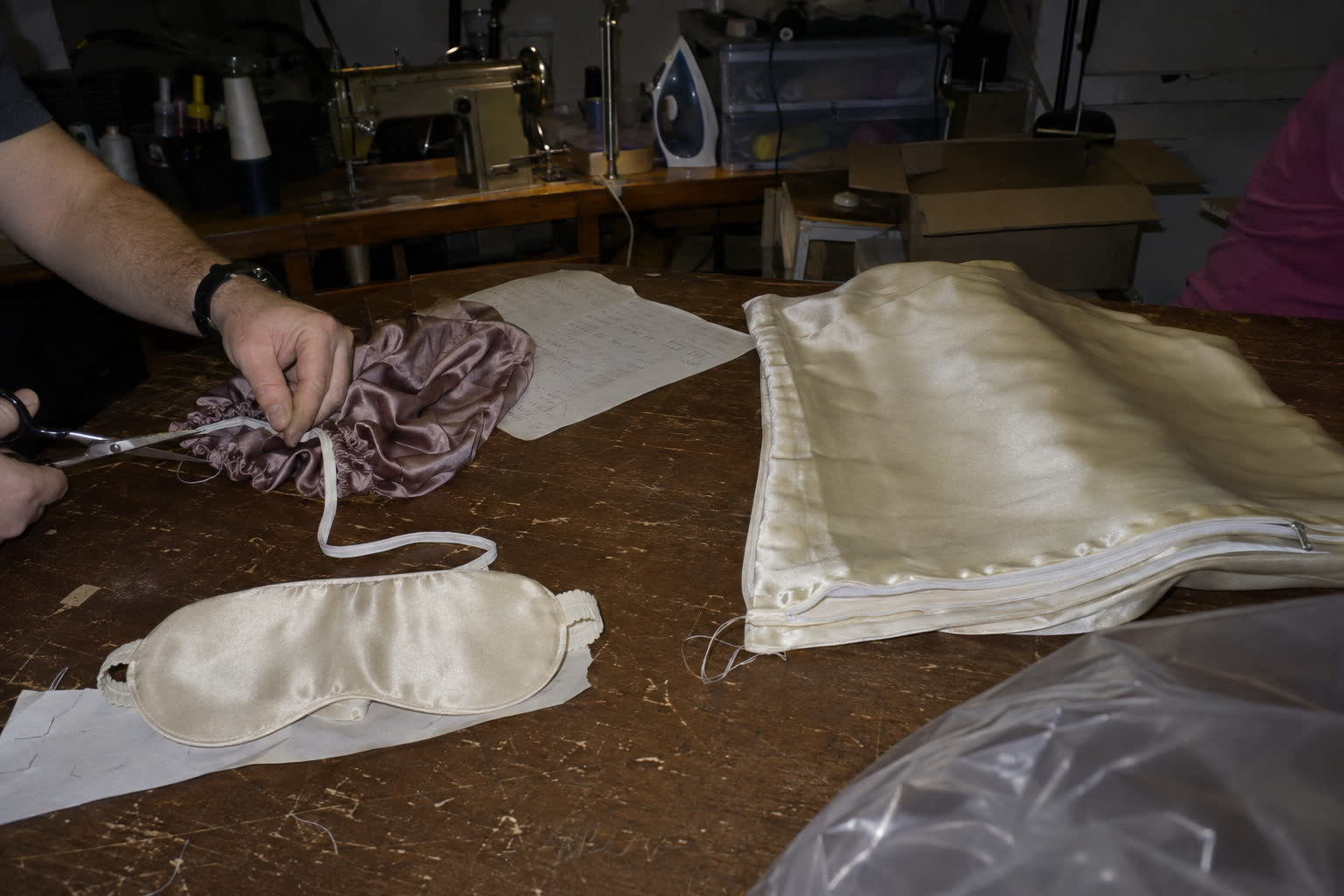
At the next market, a hairstylist touched the same silk and asked whether it could become a pillowcase. Then one of her clients asked for something easier to pack, so the team shaped its first silk sleep cap from the pillowcase offcuts.
The line grew in a natural order: better darkness, less nighttime friction, and the same protection away from home.
A small team leaves fingerprints on every improvement.
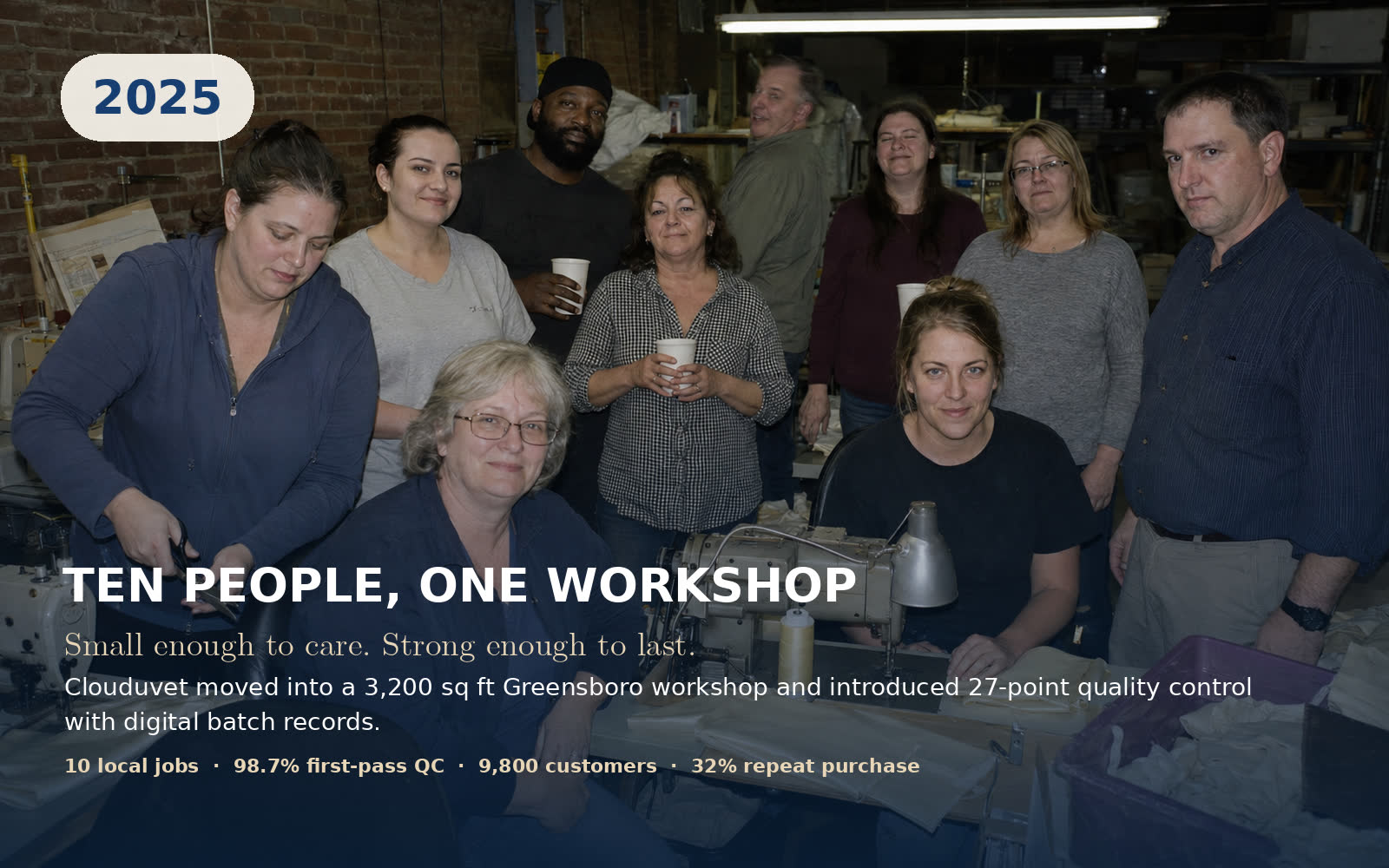
Clouduvet is now ten people—small enough for a return note to travel from the inbox to the cutting table before lunch.
Ruth — Pattern maker
Ruth stopped the first silk roll from being discarded. Even now, every new pattern begins in pencil.
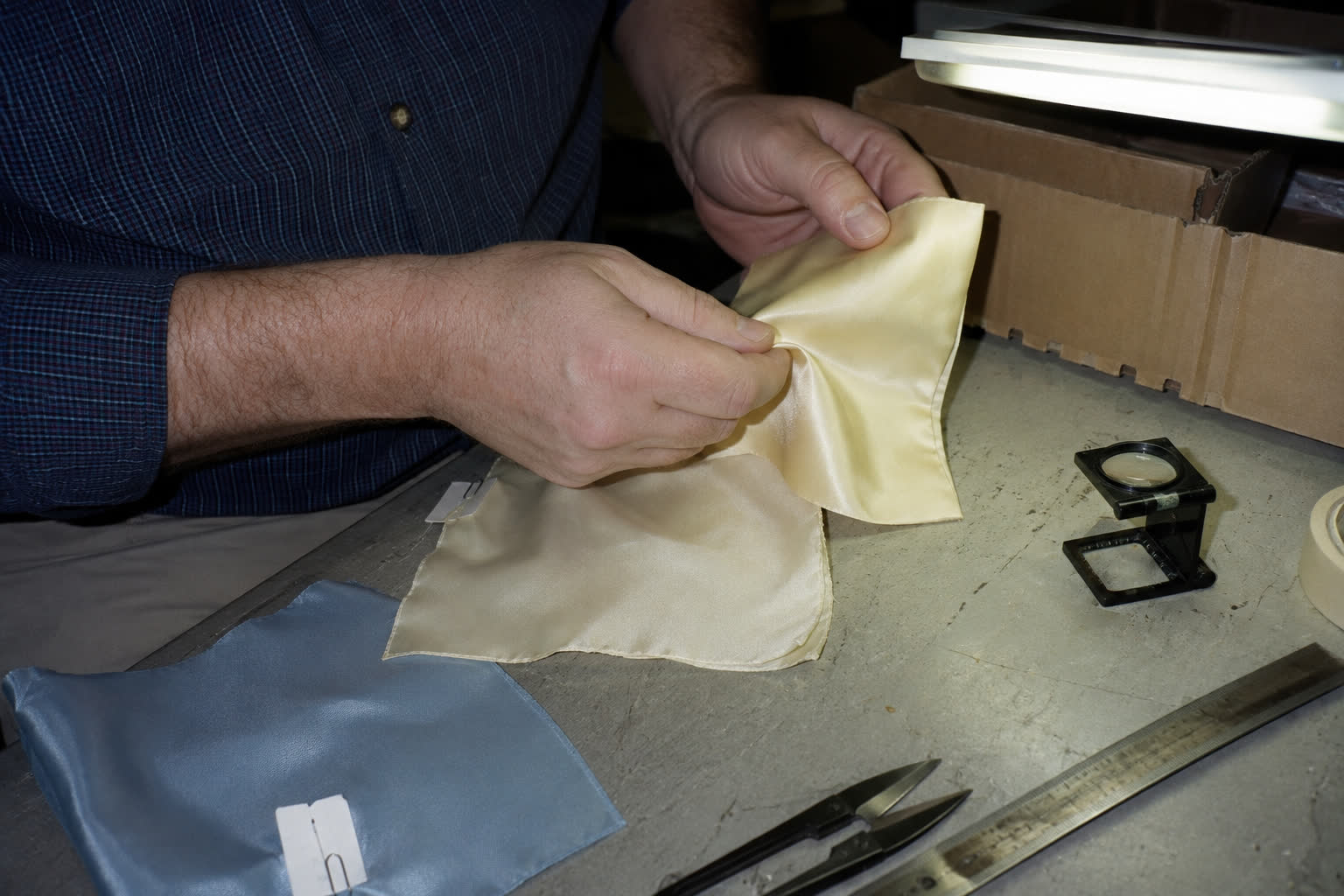
Denise — Quality lead
She runs each seam between her fingers: “The customer should never be the person who finds our mistake.”
Carlos — Cutting and machines
Carlos adjusts the feed whenever a curved sleep-cap edge refuses to lie flat.
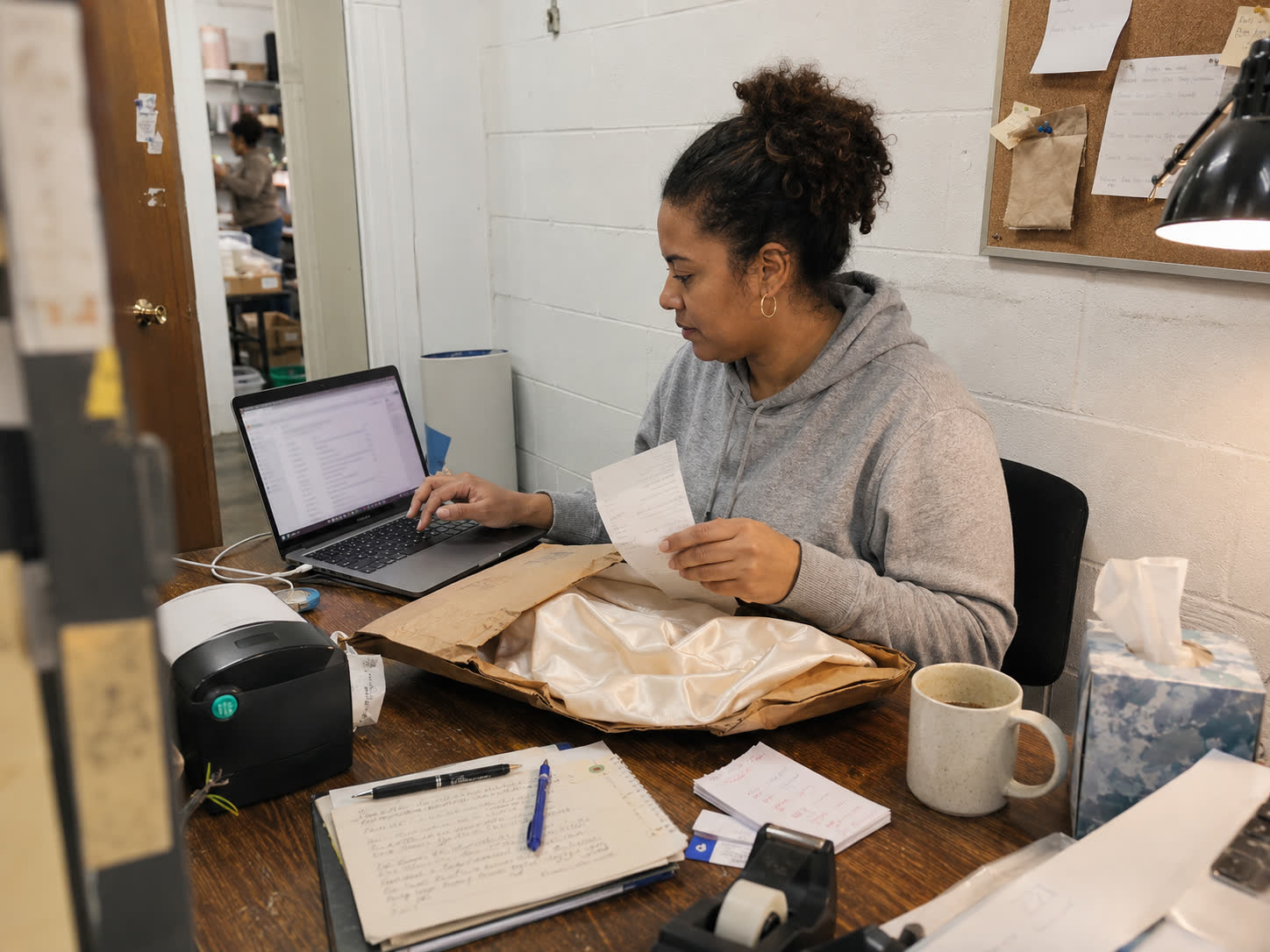
Maya — Customer care
Maya reads every return reason and carries useful feedback directly to the worktable.
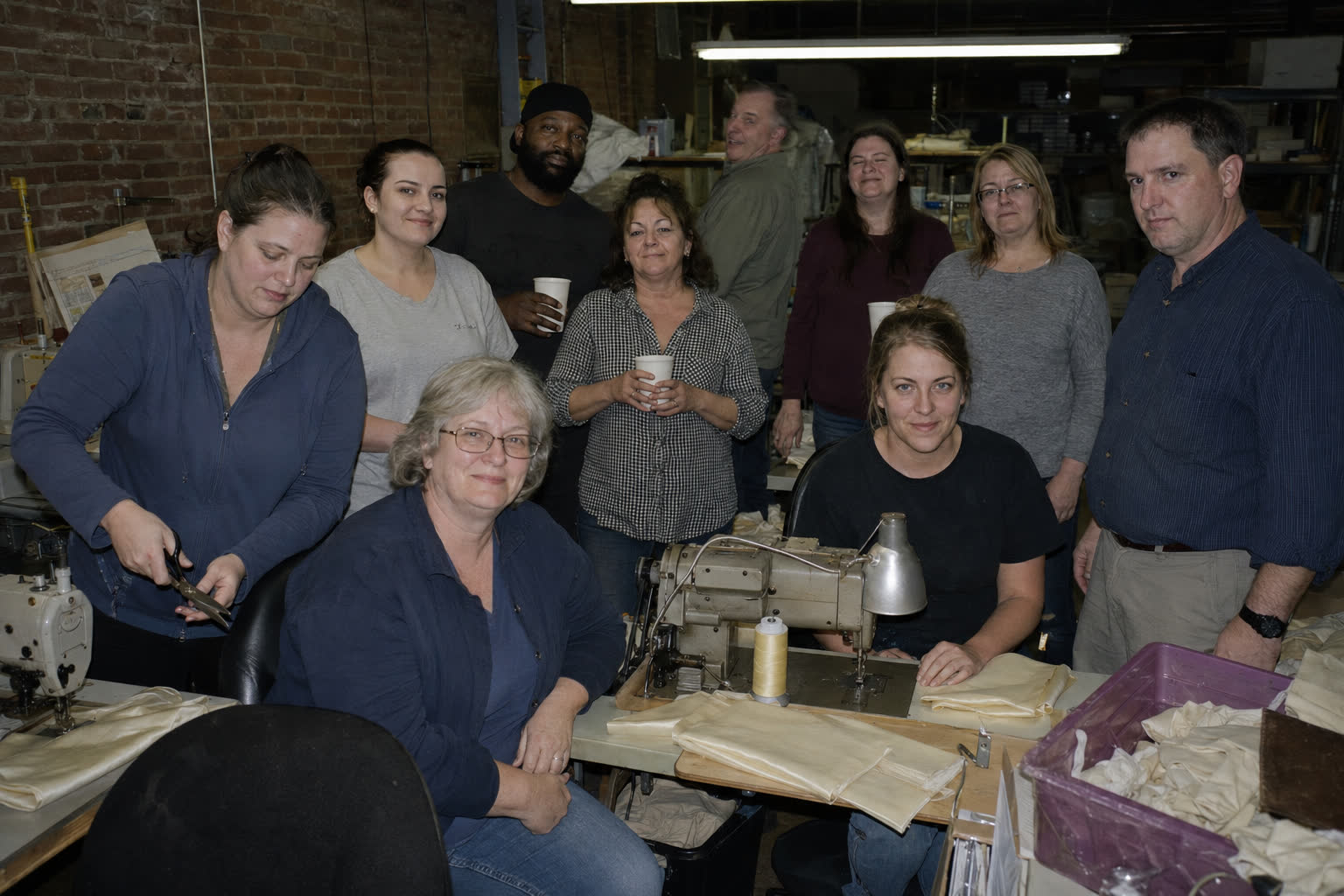
Ten people, not ten job titles.
Everyone contributes beyond a title: preparing gifts, tracing batches, saving usable silk, answering customers and testing new samples at home.
On Fridays, everyone covers the silk and eats lunch around the cutting table.
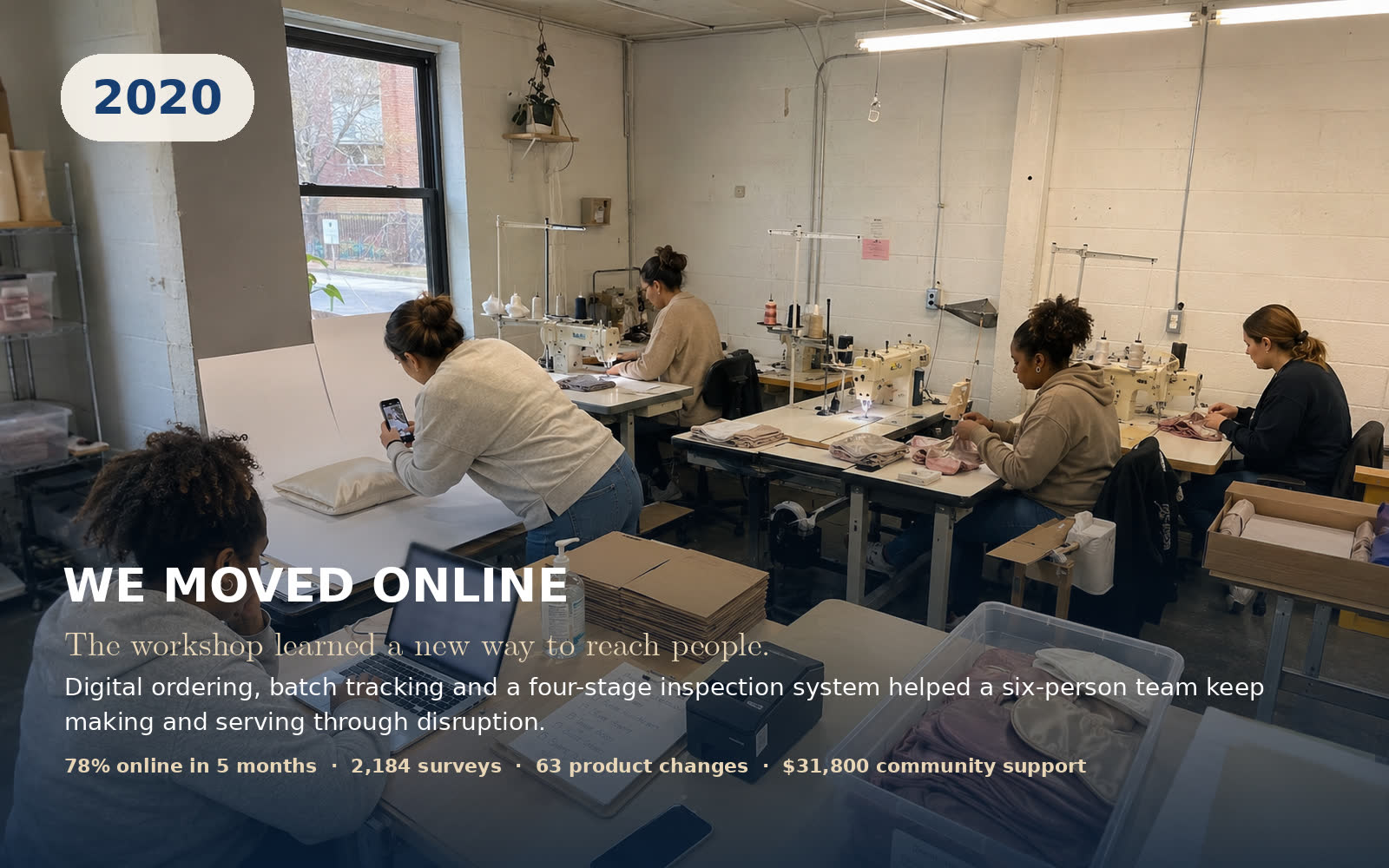
The business moved online. The conversation stayed close.
When weekend markets stopped and wholesale orders slowed, Peter photographed products near the largest window while the team learned jobs that had not existed a few months earlier.
Customer feedback led to practical changes: a softer nose bridge, wider straps, deeper pillowcase closures, better sleep-cap sizing, clearer care instructions and packaging customers did not need to rewrap.
Customers did not simply buy the finished story. They helped write the next version.
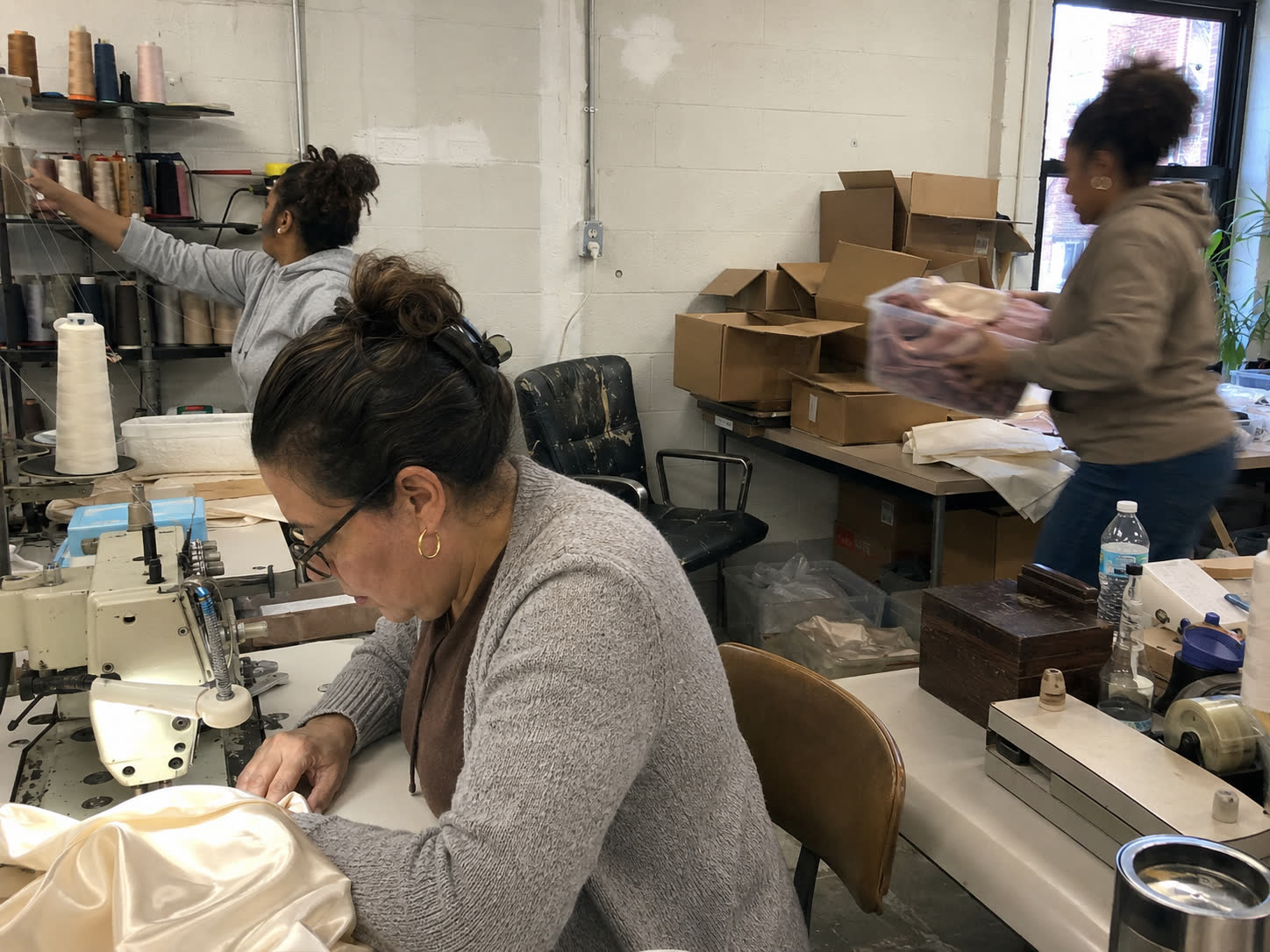
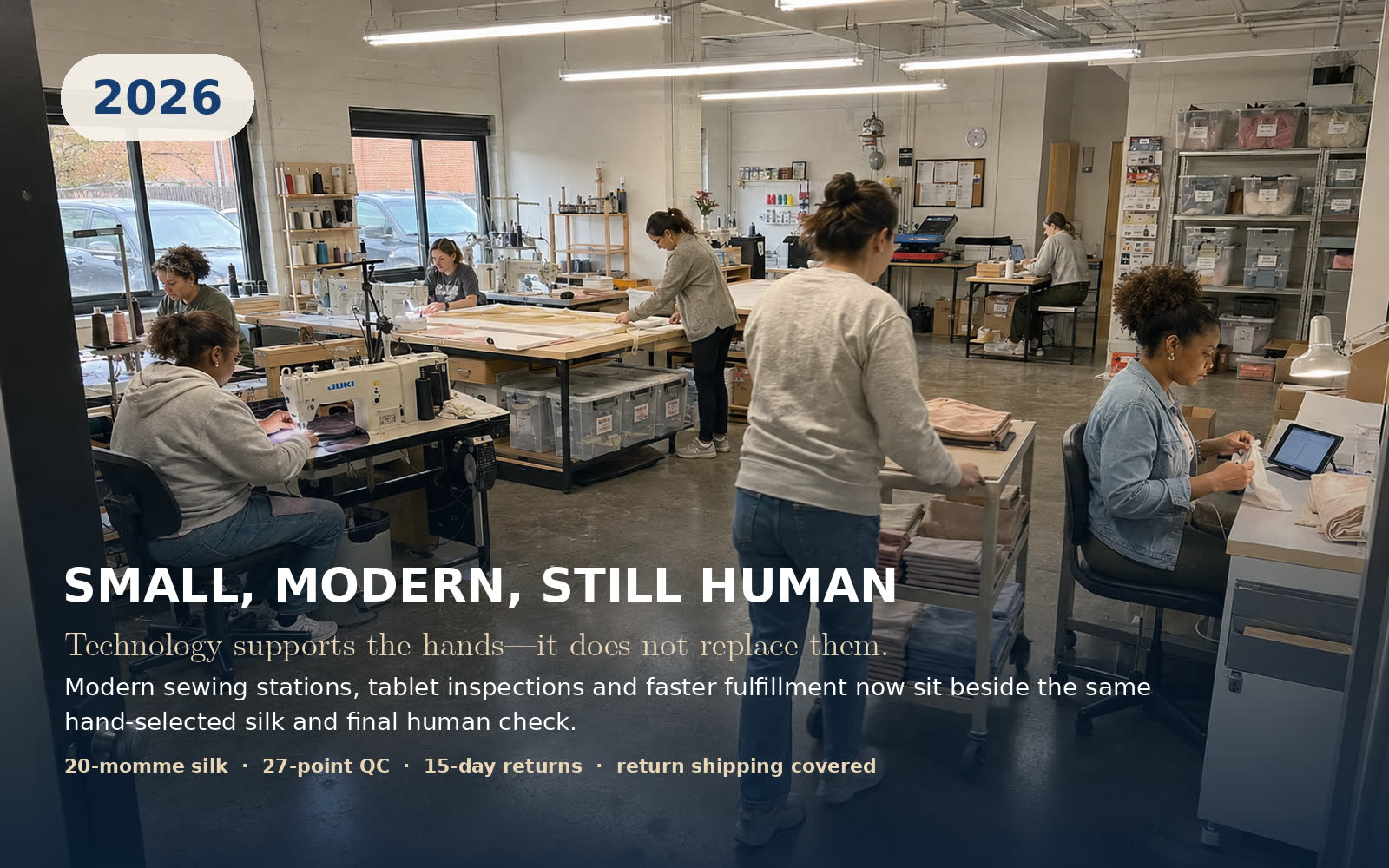
Modern enough to trace every batch. Small enough to care who opens the box.
In 2025, the team moved into a 3,200-square-foot Greensboro workshop. It is ten people, a shared cutting table, labeled fabric shelves, modern batch records and 27 quality checks.
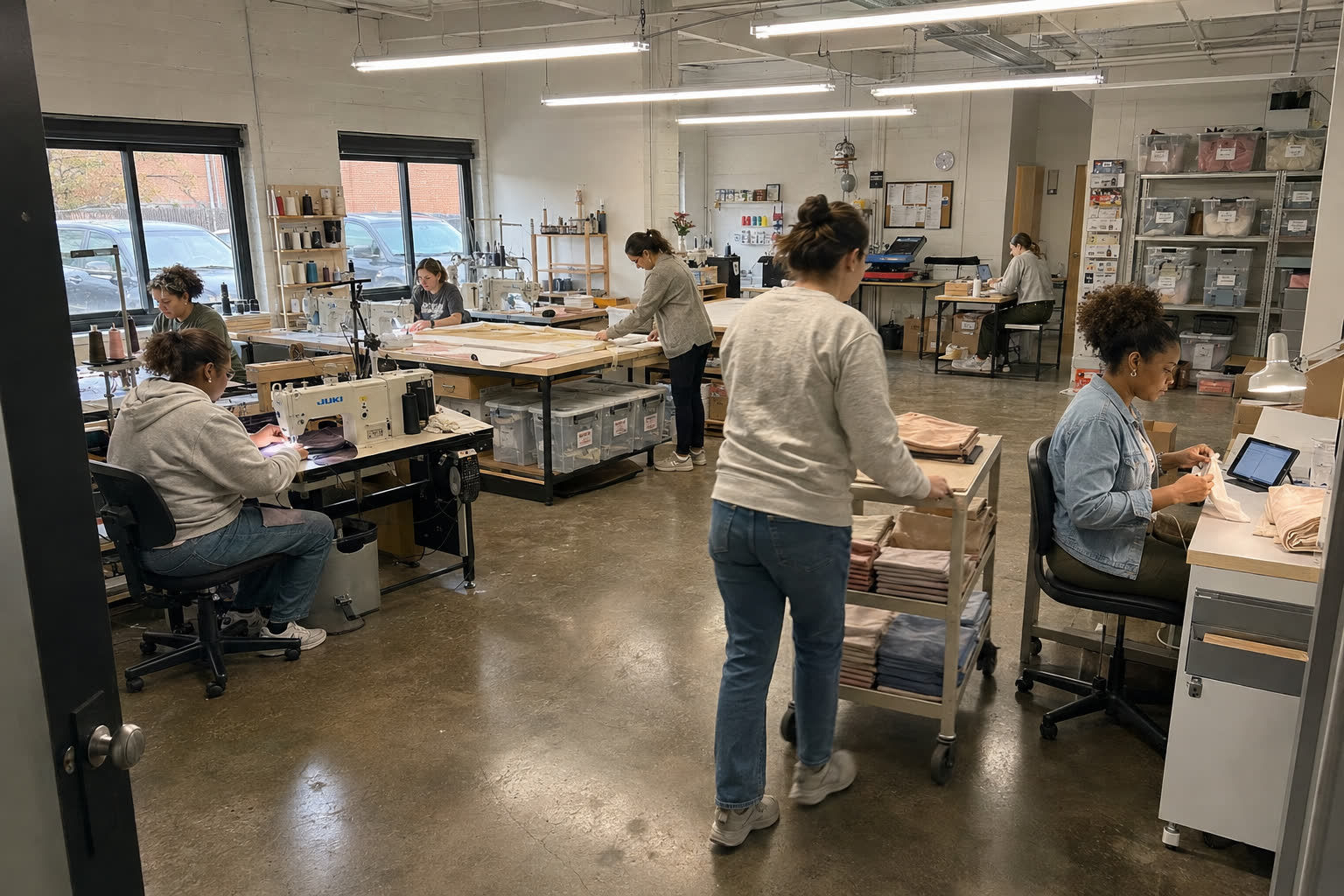

Come find the workshop behind the story.
47 Wrenford Loom RoadGreensboro, NC 27408
(336) 555-0186
2000–2026
Each decision became the next stage of Clouduvet.